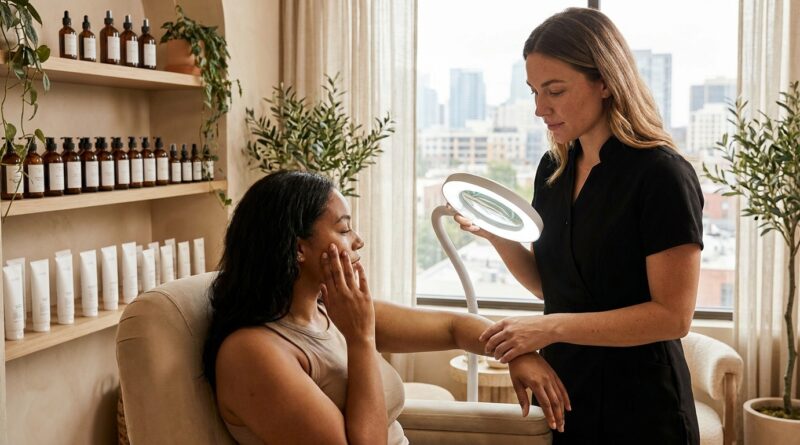
Top‑Rated ‘Skin-First Glow’ Tanning Salons In Major Cities: Where Estheticians Run The Tan Room
You can feel the difference almost right away. The bad salons rush you through a menu, hand you a shade card, and spray first, ask questions never. Then a few days later, the tan grabs onto dry patches, fades weirdly around breakouts, or turns warmer than your undertone can handle. That is exactly why more people are searching for the best tanning salons for sensitive skin in major cities. They do not just want color. They want someone who understands skin.
The good news is that a new kind of tan studio is getting easier to spot. These are the places where estheticians run the tan room, barrier health matters, and prep advice is based on your face and body, not a script. If your skin is reactive, acne-prone, textured, or simply expensive to maintain, that shift matters. A skin-first salon can mean fewer surprises, a smoother fade, and a glow that looks like you, just warmer.
⚡ In a Hurry? Key Takeaways
- The best tanning salons for sensitive skin in major cities usually have licensed estheticians, custom consultations, and gentler formulas.
- Ask about skin prep, ingredient lists, acne-safe options, and how they adjust for dry patches, eczema history, or active skincare.
- Paying a little more at a skin-first studio often saves money because the tan wears better and is less likely to trigger irritation or patchiness.
What makes a salon truly “skin-first”
A skin-first tanning salon does not treat every client the same. That sounds obvious, but in a lot of chain settings, speed wins. You are in, sprayed, and out. No one asks if you use retinoids. No one checks whether your elbows are dry, whether your chest breaks out easily, or whether your undertone pulls olive, golden, or neutral.
An esthetician-led salon usually starts in a different place. They ask about skin history. They look at texture. They explain how the solution may develop on oily areas versus dry ones. They also tend to care more about aftercare, because they know the tan is only as good as the skin underneath it.
Green flags to look for
If you are trying to sort the great studios from the pretty ones on Instagram, start here:
- Licensed estheticians or esthetics-trained spray artists
- A real consultation before the appointment
- Questions about active acne, eczema, psoriasis, or product sensitivities
- Custom color mixing instead of one standard shade
- Prep guidance based on your routine, not generic instructions
- Barrier-friendly retail, like fragrance-light moisturizers and gentle exfoliation options
That last point matters more than people think. A salon that sells only harsh scrubs and perfumed body products may not be thinking about reactive skin. A salon that talks about barrier care probably is.
Why big-city clients are looking for esthetician-run tan rooms
In major cities, beauty services move fast. There is more competition, more marketing, and more pressure to book whatever is closest. But city clients also tend to have more complex routines. Prescription skincare. Facials. Waxing schedules. Laser appointments. Gym showers. Pollution exposure. All of that changes how a tan develops and fades.
That is why the best tanning salons for sensitive skin in major cities stand out. They understand the full picture. They know that someone using exfoliating acids needs a different plan than someone with dry body skin and no active ingredients. They know a “deep bronze” request may need to be toned down if your skin is inflamed, healing, or freshly treated.
If your goal is a polished, camera-ready finish, but you still want the process handled safely, our guide to Top-Rated ‘Gen Z Glow’ Tanning Salons In Major Cities: Where Social-Media-Ready Tans Are Done Safely is also worth a look. There is some overlap, but the skin-first crowd usually wants a slower, more customized approach.
How to spot the right salon before you book
You do not need to become a beauty chemist. You just need to ask a few smart questions.
Questions worth sending by text or DM
- Do you have licensed estheticians on staff?
- Do you customize solution depth based on undertone and skin condition?
- What do you recommend for acne-prone or sensitive skin?
- Can you work around eczema patches, healing blemishes, or dry texture?
- What should I stop using before my appointment?
- Do you offer patch tests or ingredient information if I am reactive?
The replies tell you a lot. A great studio answers clearly and specifically. A weak one says, “Our formula works for everyone.” That is usually your sign to keep looking.
What reviews can reveal
Look for reviews that mention:
- Even fading
- No orange tone
- Help with prep and aftercare
- Good results on dry or mature skin
- Comfort with acne, scars, or texture
Be cautious if every review talks only about speed, specials, or how dark the tan got. Those things are not bad. They are just not the best sign if your skin tends to react.
Major-city salon traits that deserve top marks
Rather than pretend one name fits every neighborhood and skin type, it is smarter to know the features that usually define top-rated skin-first salons in major markets like New York, Los Angeles, Chicago, Miami, Dallas, Atlanta, and San Francisco.
1. They build the tan around your skin, not around a package
The best studios do not start with “rapid” or “ultra dark.” They start with your skin tone, event timeline, and skin condition. That means better color matching and less risk of a result that looks disconnected from your natural undertone.
2. They understand face and body need different handling
This is a big one. Estheticians know the face often has different concerns than the body. More breakouts. More exfoliation. More active ingredients. A good salon may use lighter passes, facial-safe finishing products, or targeted advice so your face does not fade three days before everything else.
3. They care about the fade, not just the first 24 hours
Anyone can make a tan look good under studio lighting for a few hours. The real test is day four, day six, day eight. Skin-first salons talk about maintenance because they know longevity matters more than launch day.
Who benefits most from a skin-first tanning studio
Pretty much anyone can benefit, but a few groups tend to notice the difference fastest:
- People with sensitive or reactive skin
- Clients with acne on the chest, back, or jawline
- Those with visible dryness, KP, or textured skin
- People using tretinoin, acids, benzoyl peroxide, or brightening products
- Anyone who has had a patchy chain-salon tan before
If you have ever said, “Spray tans just do not work on me,” there is a decent chance the issue was not spray tan in general. It was the wrong prep, wrong formula, or wrong artist.
What to do before and after your appointment
This part is not glamorous, but it makes a huge difference.
Before your tan
- Pause harsh exfoliants on the body if your salon tells you to
- Do hair removal at the recommended interval, not the same hour
- Moisturize dry zones in the days leading up, not heavily right before
- Skip heavy perfume, oils, or deodorant unless your salon says otherwise
- Tell them about any prescriptions or active irritation
After your tan
- Use a gentle, fragrance-light moisturizer
- Avoid aggressive scrubs
- Pat skin dry instead of rubbing hard with towels
- Watch acne-prone zones and keep products simple
- Follow your salon’s rinse timing exactly
Think of it like good Wi-Fi. If the setup is bad, no amount of hoping fixes it later. Tanning is similar. The final result depends on what happened before the first spray.
At a Glance: Comparison
| Feature/Aspect | Details | Verdict |
|---|---|---|
| Consultation quality | Skin-first salons ask about sensitivity, active skincare, undertone, and past tanning results before choosing a formula. | Most important sign of a better tan experience. |
| Formula and technique | Esthetician-run studios are more likely to customize shade depth, adjust for dry areas, and use gentler products. | Best option for sensitive, acne-prone, or textured skin. |
| Value for money | Prices may be higher than chain salons, but better prep and smoother fading often mean fewer redo appointments. | Usually worth it if you care about consistency and skin comfort. |
Conclusion
The best tanning salons for sensitive skin in major cities are not just selling bronze. They are offering judgment, training, and a little respect for the fact that skin is not one-size-fits-all. Right now the biggest shift in beauty is toward treatments that protect the skin barrier while still delivering results, and tanning is no exception. By curating skin-first salons in major cities, we help the community find spots that combine sunless expertise with esthetics training, so people with sensitive, acne-prone or textured skin are less likely to waste money on tans that cling to dry patches or aggravate breakouts. It also shines a light on local, often woman-owned studios that quietly invest in better ingredients and education. Those are exactly the businesses worth supporting, and exactly the kind of local glow economy Tan Directory is built to help people find.